
Bourbon vs Tennessee Whiskey: What’s the Difference?
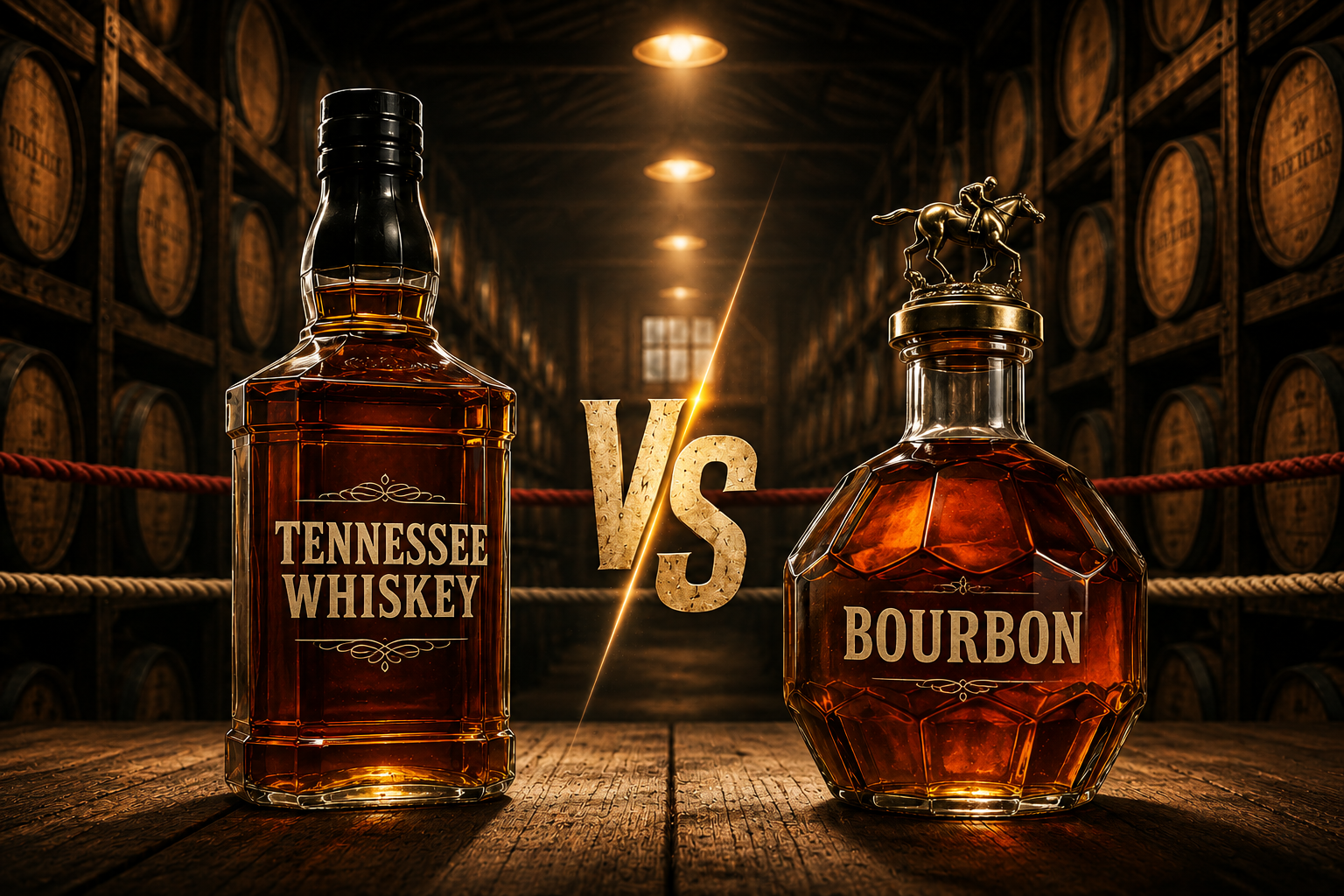
It’s one of the most common questions on our whiskey tours: “Is Tennessee whiskey just bourbon?” The answer is no. But also, kind of yes. The truth is…it's complicated. Bourbon and Tennessee whiskey have the exact same ingredients, aging and proof requirements, and barreling practices. However, a technique known as the Lincoln County Process, developed in the 1800s in rural Tennessee, differentiates these two styles of American whiskey.
In this article, we will discuss the difference between bourbon and Tennessee whiskey, and dig into the origins of the Lincoln County Process that sets them apart.
What Is Bourbon?
Let’s start with the basics. Bourbon is an American whiskey with several strict legal requirements. Here are the core rules distillers must follow to have their whiskey qualify as bourbon:
Made in the United States
Mash bill must contain at least 51% corn
Rye, wheat, and barely can be used as well, but bourbon is a corn-based whiskey
Aged in new charred oak barrels
Distilled to no more than 160 proof
Entered into barrels at no more than 125 proof
However, the proof can go up while inside the barrel, and it is not uncommon to find “barrel-proof” bottles of whiskey over 125 proof
No additives for straight bourbon
Fun Fact: A persistent myth is that all bourbon must be made in Kentucky. The truth is, bourbon can be made anywhere in the United States, as long as it follows the requirements outlined above. Kentucky has several characteristics that make it ideal for bourbon production (limestone, fertile soil, hot summers/cold winters), but so does Tennessee!
What Is Tennessee Whiskey?
Tennessee whiskey follows almost all of the same rules as bourbon. In fact, many Tennessee whiskeys technically qualify as bourbon under federal law. Like bourbon, Tennessee whiskey must be made in the United States, contain at least 51% corn, and be aged in new charred oak barrels. So what actually makes it different?
The biggest distinction is geography and filtration. To be labeled Tennessee whiskey, the spirit must be produced in Tennessee and go through an additional step known as the Lincoln County Process before aging. This process involves slowly filtering newly distilled whiskey through sugar maple charcoal before it enters the barrel. The charcoal mellowing removes some impurities and contributes to the softer character many people associate with Tennessee whiskey.

Barrel house at Nearest Green Distillery, producer of Uncle Nearest Whiskey
While the process is most commonly associated with brands like Jack Daniel’s and Uncle Nearest, the practice dates back well before modern whiskey tourism. Distillers in Tennessee were using charcoal filtration generations ago, long before bourbon became the dominant name in American whiskey.
The Lincoln County Process Explained
The Lincoln County Process is the defining characteristic of Tennessee whiskey, but many people are surprised to learn how simple it sounds on paper. Before the whiskey goes into a barrel to age, it is filtered through layers of charcoal made from sugar maple wood. Depending on the distillery, this filtration can take several days.
The result is not necessarily a completely different flavor profile, but rather a different texture and overall drinking experience. Tennessee whiskey is often described as smoother, mellower, or slightly sweeter than many traditional bourbons. The charcoal filtration helps soften some of the harsher notes that can come from fresh distillate before the aging process even begins.
If you visit multiple distilleries in Tennessee, you will also notice that no two approaches are exactly alike. Some distilleries use massive vats filled with charcoal, while others have modernized the process with newer equipment and filtration methods. Even though the fundamentals remain the same, each distillery puts its own spin on the tradition.
Is Tennessee Whiskey Technically Bourbon?
Here is where things get a little confusing. Legally speaking, most Tennessee whiskey meets every requirement to qualify as bourbon. It is made from a corn-heavy mash bill, distilled and barreled according to bourbon regulations, and aged in new charred oak barrels. If you removed the words “Tennessee whiskey” from the label, many bottles could legally be called bourbon.
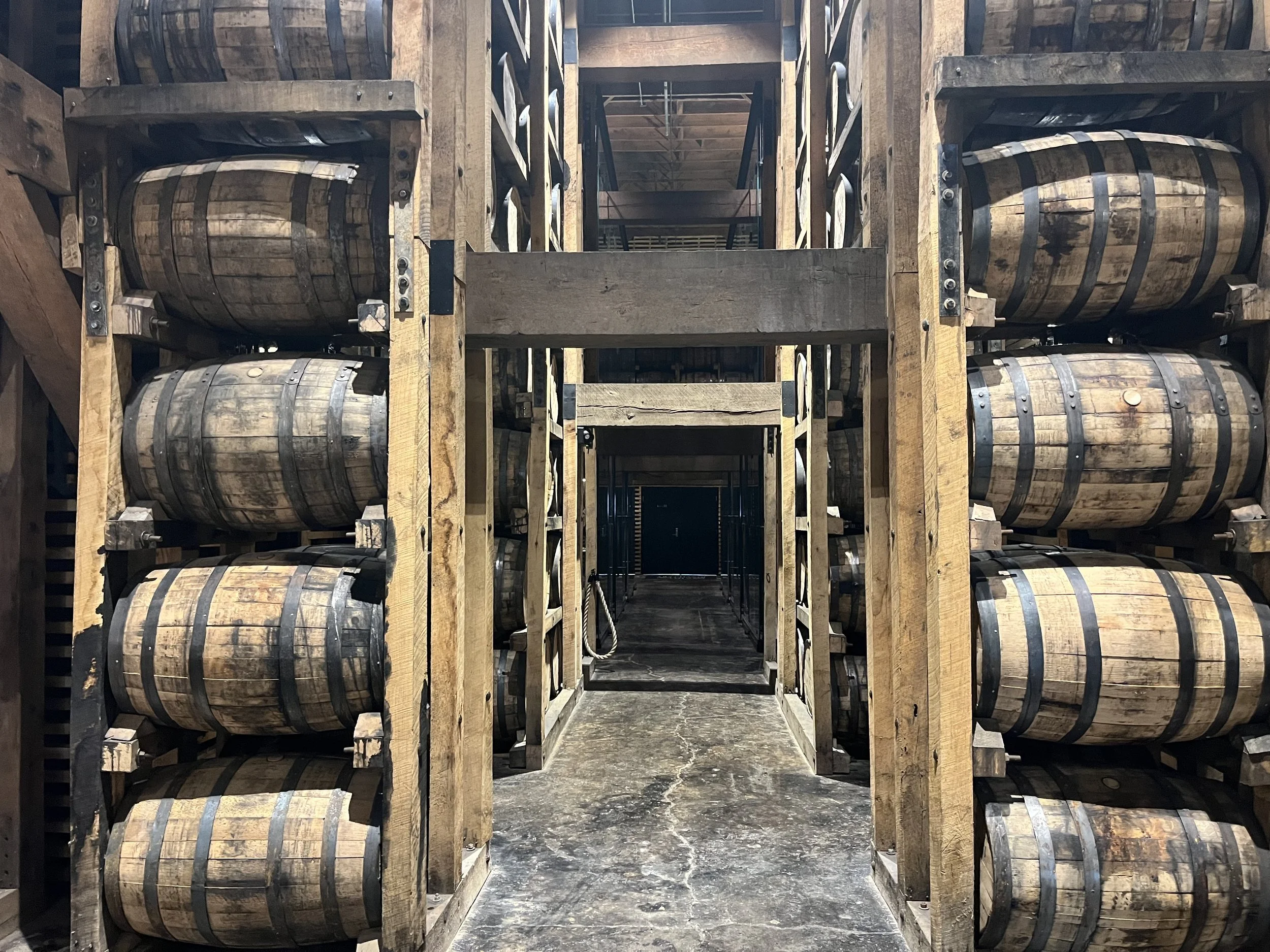
Barrel house at the Jack Daniel Distillery
However, Tennessee distillers have spent generations building a separate identity around their whiskey. The Lincoln County Process, combined with the state’s whiskey-making history, helped establish Tennessee whiskey as its own category. That distinction became official in 2013 when Tennessee passed state legislation defining the requirements for Tennessee whiskey production.
A simple way to think about it is this: all Tennessee whiskey can technically be bourbon, but not all bourbon can be Tennessee whiskey. The extra charcoal mellowing step and the requirement that it be made in Tennessee are what separate the two.
Flavor Differences Between Bourbon and Tennessee Whiskey
Flavor is subjective, and every distillery produces whiskey with its own unique style, but there are some general differences people often notice when comparing bourbon and Tennessee whiskey side by side.
Bourbon is frequently associated with bold caramel, vanilla, oak, and spice flavors. Rye-heavy bourbons can bring noticeable pepper and baking spice notes, while wheated bourbons tend to lean softer and sweeter. Because bourbon is made all across the country, there is also a wide range of flavor variation between distilleries.
Tennessee whiskey often carries many of the same core flavors, but the charcoal mellowing process can create a softer finish and a smoother mouthfeel. Some drinkers describe subtle notes of maple, toasted sugar, or mellow oak that stand apart from traditional bourbons. That does not mean Tennessee whiskey is automatically lighter or sweeter, but many whiskey newcomers find it especially approachable.
The best way to understand the difference is to taste them side by side. Visiting distilleries and trying multiple styles back-to-back gives you a much clearer picture than any label description ever could.
Pro-tip: Want to check some Tennessee distilleries off your whiskey bucket list? Book a bus tour with Tennessee Whiskey Tours!
Final Thoughts
Bourbon and Tennessee whiskey share much more in common than most people realize. They use nearly identical ingredients, follow many of the same production rules, and often deliver similar flavor profiles. The biggest difference comes down to the Lincoln County Process and the identity Tennessee distillers have built around it for generations.
Whether you prefer the bold spice of a bourbon or the mellow character of a Tennessee whiskey, both styles represent an important part of American whiskey history. And honestly, there is no better way to understand the difference than visiting the distilleries themselves, talking with the people making the whiskey, and tasting it where it is produced.
Tennessee Whiskey vs. Bourbon FAQs
-
Technically, many Tennessee whiskeys meet all the federal legal requirements to qualify as bourbon. However, Tennessee whiskey is considered its own category because it must be made in Tennessee and go through the Lincoln County Process before aging.
-
The Lincoln County Process is a charcoal filtration method used in Tennessee whiskey production. Before the whiskey is aged in barrels, it is filtered through sugar maple charcoal to help mellow the spirit and remove impurities.
-
No. Bourbon can be made anywhere in the United States as long as it follows the legal production requirements. Kentucky is the most famous bourbon-producing state, but Tennessee, Texas, Colorado, and many other states also produce bourbon.
-
Many drinkers associate Tennessee whiskey with a smoother flavor and softer finish because of the charcoal mellowing process used before aging. However, flavor can vary significantly between distilleries and mash bills.
-
The best way to compare them is through a side-by-side tasting. Visiting distilleries and trying multiple styles allows you to notice differences in sweetness, spice, oak character, and mouthfeel more clearly than simply reading tasting notes on a bottle.